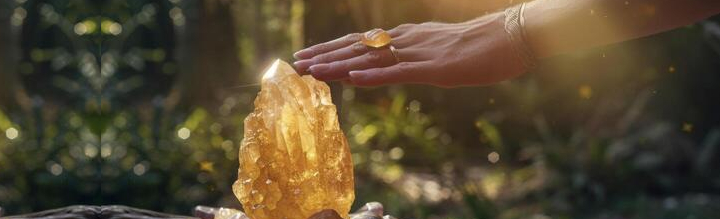
Crystals have fascinated people for thousands of years. From ancient amulets and ceremonial objects to the polished stones found in modern wellness spaces, they have long been associated with protection, healing, spiritual awareness and personal transformation. Today, crystal healing remains popular among people who are drawn to its beauty, symbolism and connection with the natural world.
Supporters believe that different crystals possess unique energetic qualities that can support emotional balance, relaxation and spiritual growth. Some associate amethyst with calm, rose quartz with love and clear quartz with clarity or intention.
But what does scientific research tell us about these claims? Can crystals genuinely influence our wellbeing, or do their perceived benefits arise from other factors? Exploring the evidence does not require us to dismiss personal spiritual experiences. Instead, it offers an opportunity to understand the difference between what people experience, what they believe and what science has been able to demonstrate.
Understanding the Principles of Crystal Healing
Crystal healing is a complementary wellness practice in which crystals and gemstones are used with the intention of supporting physical, emotional or spiritual wellbeing.
Practitioners may place crystals on or around the body, hold them during meditation, carry them as personal reminders or arrange them in a living space. Some systems assign particular properties to individual stones, linking them to the body’s chakras, emotional states or spiritual intentions.
These associations vary between traditions and practitioners. There is no single, universally agreed system of crystal healing.
One common explanation is that crystals emit or interact with subtle energies that influence the human energy field. However, science has not established the existence of a human energy field that behaves in the way proposed by these healing systems, nor has it demonstrated that crystals can correct such an energy field to improve health.
Crystals do have measurable physical properties. Their structures can produce effects such as piezoelectricity in certain materials, where mechanical pressure generates an electrical charge. Quartz, for example, is used in electronic devices because of its predictable vibrational properties. However, these established physical effects do not demonstrate that holding quartz can heal illness or balance a person’s spiritual energy.
Understanding this distinction is important when considering the scientific evidence.
What Does Scientific Research Show?
Research specifically examining crystal healing is limited, and there is currently no robust, consistent scientific evidence that crystals have healing powers beyond effects that can be explained by established physical or psychological processes.
One frequently discussed study is a 2001 experiment by psychologist Christopher French and colleagues, presented at a conference of the British Psychological Society. Participants who meditated while holding either genuine quartz crystals or imitation crystals reported a range of sensations, including warmth, tingling and changes in concentration. However, those holding genuine crystals were not significantly more likely to report these experiences than those holding imitations.
The findings suggested that expectations and beliefs may influence what people experience during crystal meditation. However, because the study was presented as conference research rather than a substantial, definitive clinical trial, it should not be treated as the final word on the subject.
More broadly, high-quality clinical trials establishing that crystals can treat medical conditions are lacking. There is no reliable scientific basis for claiming that a particular gemstone can cure cancer, regulate hormones, treat depression or replace medical treatment.
This does not mean that every person who finds crystal healing meaningful is imagining their experience. It means that the experience itself does not establish that the crystal possesses a specific healing mechanism.
Science evaluates claims by asking whether an effect can be measured, reproduced and distinguished from other possible explanations. For crystal healing, convincing evidence of a specific therapeutic effect has not yet emerged.
The Role of the Placebo Effect
One of the most interesting explanations for why people may feel better after a crystal healing session is the placebo effect.
A placebo effect occurs when expectations, beliefs and the context of an experience contribute to a change in how someone feels or perceives symptoms. It is a recognised phenomenon in medical research, although it does not mean that every improvement is caused by expectation alone.
For example, someone who holds a smooth amethyst while sitting quietly may feel calmer. The crystal’s colour, texture and symbolic meaning may help them focus their attention. The quiet environment, slow breathing and expectation of relaxation may also contribute.
The resulting feeling of calm can be genuine, even if the crystal itself has no demonstrated therapeutic property.
Placebo-related effects can influence subjective experiences such as pain, nausea, stress and anxiety. They do not establish that crystals can eliminate the underlying cause of a disease, and they should not be confused with proof of a crystal-specific healing effect.
This distinction allows us to recognise the value a person may find in a practice without making claims that the evidence cannot support.
How Ritual, Intention and Mindfulness May Help
Crystal healing often involves more than the stone itself. It may include meditation, focused breathing, reflection, quiet surroundings and the setting of personal intentions.
These elements can have meaningful psychological effects.
Holding a crystal during meditation can provide a physical point of focus, helping someone return their attention to the present moment when their thoughts wander. Choosing a particular stone to represent courage, compassion or self-acceptance can also turn an abstract intention into a tangible reminder.
For instance, a person who associates rose quartz with self-love might keep it on a bedside table as a reminder to practise kinder self-talk. Another person might carry a small stone as a cue to pause and take a few slow breaths during a stressful day.
The potential benefit in these examples comes from the person’s attention, habits, interpretation and repeated behaviour. The crystal acts as an anchor for the practice rather than a scientifically established source of healing energy.
Research supports the potential benefits of some related practices, particularly mindfulness and meditation, for certain aspects of stress management and wellbeing. However, evidence for meditation should not automatically be interpreted as evidence for crystal healing itself.
Why Personal Experiences Can Feel So Convincing
When someone reports feeling lighter, more peaceful or emotionally balanced after a crystal session, that experience deserves to be heard respectfully. Yet personal experiences can be difficult to interpret.
Our expectations influence perception, and we naturally notice experiences that seem to confirm what we already believe. If someone expects amethyst to promote calm, they may pay particular attention to moments when they feel relaxed while using it.
Other influences may also be present: a supportive practitioner, the opportunity to discuss personal concerns, a period of rest or the relief of taking time for oneself.
This does not make the experience meaningless. It simply means that several factors may contribute to the outcome.
A useful approach is to remain curious. You can appreciate what a practice brings to your life while staying open to different explanations for why it helps.
Using Crystals Safely and Thoughtfully
For people who enjoy crystals as part of a spiritual or personal wellness practice, there are simple ways to incorporate them responsibly.
- •Use them as reminders of intention. Choose a stone that symbolises something you wish to cultivate, such as patience, courage or gratitude.
- •Combine them with established wellbeing practices. Use a crystal as a meditation focus, a journaling prompt or a reminder to take a mindful break.
- •Keep expectations realistic. Treat crystals as personal or spiritual tools rather than proven medical treatments.
- •Be cautious of exaggerated claims. No practitioner should promise that a crystal will cure an illness or insist that you must purchase expensive stones to protect yourself.
- •Consider physical safety. Some minerals can be toxic, and crystal dust should not be inhaled. Avoid ingesting crystals, placing unknown minerals in drinking water or using crystal-infused water unless the materials and method have been independently established as safe.
Most importantly, crystal practices should complement, not replace, appropriate healthcare. If you have persistent physical symptoms or concerns about your mental health, consult a suitably qualified healthcare professional.
Bringing Science and Spirituality into Conversation
Science and spirituality approach questions about human experience in different ways. Science relies on observation, testing and reproducible evidence. Spiritual practices often explore meaning, symbolism, personal reflection and a sense of connection.
These approaches do not have to be treated as enemies. It is possible to enjoy the beauty of crystals, value their place in spiritual traditions and use them as part of a reflective practice while acknowledging that their proposed healing powers have not been scientifically established.
The most balanced position is neither to accept every claim uncritically nor to dismiss every personal experience as worthless. Instead, we can ask what the evidence supports, recognise the role of expectation and ritual, and remain honest about what is not yet known.
Crystals may serve as beautiful reminders of our intentions and the qualities we wish to nurture. They can invite us to slow down, reflect and reconnect with what matters. Whether their significance is spiritual, emotional, cultural or simply aesthetic is something each person can explore for themselves.
Ultimately, the value of a crystal need not depend on proving that it possesses a mysterious healing power. Sometimes its greatest role is the meaning we give it and the mindful actions it inspires.
A thoughtful spiritual practice leaves room for wonder while remaining grounded in discernment.

Author: Spirit Connection
Welcome to Spirit Connection, your online sanctuary for spiritual growth, enlightenment, and transformation. Founded by me, Glynis Brits - a gifted clairvoyant medium, spiritual teacher, and life coach, my mission is to guide you on a journey of self-discovery, healing, and deeper connection with the spiritual realm. Here at Spirit Connection, I publish daily articles on all things spiritual, esoteric, and metaphysical, offering insights and wisdom to support your awakening. Whether you're looking to connect with your spirit guides, enhance your intuition, or explore the mysteries of the universe, I provide the tools and knowledge to help you navigate your path. Through private readings, spiritual coaching, and personalized guidance, I empower individuals to embrace their divine potential and align with their soul’s purpose. Whether you're seeking clarity, healing, or a deeper understanding of your spiritual journey, I am here to support you every step of the way. Join my community and awaken to the magic of the unseen world. Your journey to enlightenment starts here.