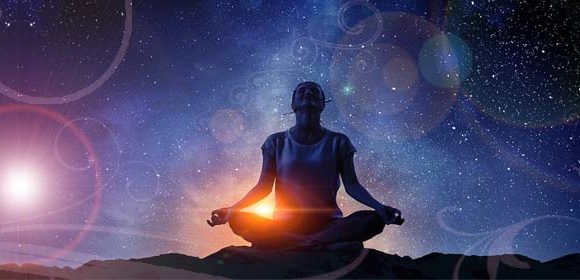
In a world that seems to become busier by the day, finding a few moments of stillness can feel almost impossible. Our minds are constantly occupied with work, family, responsibilities, social media and the many demands of everyday life. Yet beneath all this activity lies a quieter part of ourselves. A place of stillness, awareness and inner peace.
Meditation is one way of reconnecting with that inner space.
You do not need to be particularly spiritual, religious or experienced to meditate. You do not need special equipment, expensive courses or hours of free time. Meditation is simply the practice of becoming more aware of the present moment and learning to observe your thoughts, feelings and sensations without becoming completely caught up in them.
For someone beginning their spiritual journey, meditation can become a valuable doorway to greater self-awareness.
What is meditation?
Meditation is a practice in which we deliberately bring our attention to the present moment.
There are many different forms of meditation. Some involve focusing on the breath, while others use a mantra, prayer, visualisation, sound or bodily sensations. Some forms encourage you simply to observe whatever arises in your awareness.
At its heart, meditation is not about forcing your mind to become completely empty. This is one of the biggest misconceptions beginners have.
Your mind will think.
It is supposed to think.
The aim is not to fight your thoughts, but to become aware of them without automatically following every thought wherever it leads. With practice, you begin to notice that you can observe a thought without necessarily believing it or acting upon it.
This simple shift can be surprisingly profound.
Why meditate?
People meditate for many different reasons. Some are looking for greater peace and relaxation, while others want to develop a deeper understanding of themselves.
A regular meditation practice may help you become more aware of your thoughts, emotions and habitual reactions. It can also create a greater sense of calm and give you an opportunity to step away from the constant stimulation of everyday life.
From a spiritual perspective, meditation can provide an opportunity to turn your attention inward.
We spend much of our lives looking outside ourselves for answers, happiness and validation. Meditation invites us to become curious about what is happening within.
Who am I beneath my thoughts?
What do I truly feel?
Why do I react in certain ways?
What beliefs have I accepted without questioning them?
What happens when I simply become still?
These are not questions that necessarily require immediate answers. Meditation allows you to sit with them and become more deeply acquainted with yourself.
How do I begin meditating?
The wonderful thing about meditation is that you can begin today.
Find a quiet place where you are unlikely to be disturbed for a few minutes. You can sit on a chair, on the floor or wherever you feel comfortable. There is no requirement to sit cross-legged or adopt a particular posture.
Keep your back reasonably straight, but don’t make yourself uncomfortable.
Close your eyes gently or lower your gaze.
Now bring your attention to your breathing.
There is no need to change your breath. Simply notice it.
Feel the air entering your body. Notice the gentle movement of your chest or abdomen. Become aware of the sensation of breathing in and breathing out.
Your mind will probably wander.
When you notice that you have become distracted, don’t criticise yourself. Simply acknowledge that your attention has wandered and gently return it to your breath.
Then do it again.
And again.
That is meditation.
Start small
One of the biggest mistakes beginners make is believing they need to meditate for thirty minutes or an hour straight away.
You don’t.
Begin with five minutes.
If five minutes feels too long, start with two or three minutes. The purpose is to establish a habit rather than prove how long you can sit still.
As meditation becomes more familiar, you can gradually increase the amount of time.
Consistency is generally more useful than intensity. Five minutes of regular practice can be far more meaningful than an hour of meditation that you only manage once every few weeks.
Consider making meditation part of your daily routine. You might meditate after waking in the morning, before going to bed, or at another time that naturally fits into your day.
What should I do when thoughts appear?
This is perhaps the most important lesson for anyone beginning meditation.
Thoughts are not a failure.
Imagine that you are sitting beside a river and watching leaves float past on the water. You don’t need to jump into the river and chase every leaf. You can simply watch it pass.
Your thoughts can be approached in the same way.
A thought appears.
You notice it.
You allow it to be there.
Then you gently return your attention to your chosen focus.
You may find yourself thinking about something that happened yesterday, planning tomorrow’s shopping, remembering a conversation or wondering whether you are meditating correctly.
That’s perfectly normal.
The moment you realise that your mind has wandered is actually a moment of awareness. Rather than seeing it as a mistake, you can see it as part of the practice.
Meditation is not about escaping yourself
It can be tempting to think of meditation as a way of escaping uncomfortable emotions or avoiding the difficulties of life. Although meditation can provide moments of peace, its deeper value can be found in learning to meet our inner experience with greater awareness.
As you become more observant, you may begin noticing emotions that you previously ignored. You might become aware of fears, insecurities, anger or old patterns of thinking.
This doesn’t mean that meditation is making these things happen.
You may simply be becoming more conscious of what was already there.
Approach these discoveries gently. Spiritual growth is not about judging yourself for what you find. It is about developing the willingness to see yourself honestly and compassionately.
There is no ‘perfect’ meditation
Another misconception is that an experienced meditator sits peacefully without a single thought.
Meditation doesn’t necessarily look like that.
Some days you may feel calm and deeply connected. Other days your mind may seem extraordinarily busy. Sometimes you may feel restless, tired or emotional.
All of these experiences can become part of your practice.
Rather than asking, “Did I meditate properly?”, try asking, “What did I become aware of?”
That question changes everything.
Meditation is not a performance. There is nothing to achieve and nobody to impress.
You are simply learning to be present.
Making meditation part of your spiritual journey
For those exploring spirituality, meditation can become much more than a relaxation technique.
It can create space for self-reflection and contemplation. Over time, you may become increasingly aware of the distinction between your thoughts and the awareness observing those thoughts.
This can lead to deeper questions about consciousness, identity and the nature of existence.
Different spiritual traditions have explored meditation for thousands of years, each offering its own practices and understanding. You don’t have to adopt a particular belief system to begin exploring meditation.
Start with curiosity.
Start with openness.
And most importantly, start where you are.
Sit quietly. Breathe. Notice.
There is no need to rush towards some extraordinary spiritual experience. The practice of meditation is often found in the simplest moments – a breath, a sensation, a thought noticed without judgement, or a brief moment in which you become completely present.
The journey inward begins with a single moment of awareness.
And you can begin that journey today.

Author: Spirit Connection
Welcome to Spirit Connection, your online sanctuary for spiritual growth, enlightenment, and transformation. Founded by me, Glynis Brits - a gifted clairvoyant medium, spiritual teacher, and life coach, my mission is to guide you on a journey of self-discovery, healing, and deeper connection with the spiritual realm. Here at Spirit Connection, I publish daily articles on all things spiritual, esoteric, and metaphysical, offering insights and wisdom to support your awakening. Whether you're looking to connect with your spirit guides, enhance your intuition, or explore the mysteries of the universe, I provide the tools and knowledge to help you navigate your path. Through private readings, spiritual coaching, and personalized guidance, I empower individuals to embrace their divine potential and align with their soul’s purpose. Whether you're seeking clarity, healing, or a deeper understanding of your spiritual journey, I am here to support you every step of the way. Join my community and awaken to the magic of the unseen world. Your journey to enlightenment starts here.