How to Create a More Peaceful, Present and Meaningful Life
There is a moment that many of us experience without quite knowing what to call it. We are busy. We are functioning. We are getting things done. We are meeting our responsibilities. And yet, somewhere beneath all the activity, there is a quiet longing to slow down.
Not necessarily to escape our lives. Not to abandon our ambitions. Not to stop caring about the people and things that matter to us. We simply want to breathe. To have time to think. To enjoy an ordinary morning. To finish a conversation without checking our phones. To sit outside without feeling that we should be doing something else. To experience our lives rather than constantly rushing through them.
Learning to slow down can sound simple, but for many people it is surprisingly difficult. We have become accustomed to speed. We expect immediate answers. Immediate communication. Immediate entertainment. Immediate results. Our calendars are full, our phones are always within reach, and our minds are often several steps ahead of where our bodies actually are.
Slowing down is therefore not simply about doing fewer things. It is about changing our relationship with time, attention and presence. And from a spiritual perspective, it can become one of the most powerful practices we undertake.
What Does It Really Mean to Slow Down?
Slowing down does not necessarily mean having a quiet, minimalist life with no responsibilities. Real life is not like that. There are children to care for, jobs to do, bills to pay, homes to manage and people who depend on us. There will always be busy seasons.
Slowing down is less about the amount you do and more about how consciously you do it. It means creating space between one thing and the next. It means resisting the urge to rush unnecessarily. It means giving your full attention to what you are doing rather than constantly thinking about what comes next.
It means becoming aware of when your pace is being driven by genuine necessity and when it is being driven by habit, anxiety or external pressure. A slower life is not necessarily a less productive life. It can simply be a more intentional one.
Why Have We Become So Bad at Slowing Down?
Modern life rewards speed. We can order something with a few taps. Send a message across the world instantly. Find information within seconds. Watch entertainment whenever we want.
Move between conversations, tasks and sources of information almost continuously. Technology has brought enormous benefits. But constant convenience has also changed our expectations.
We can begin to expect everything to happen immediately. Waiting feels inefficient. Silence feels uncomfortable. Boredom feels like something that needs to be fixed. We reach for our phones while standing in a queue. We check messages during conversations. We consume information while eating. We listen to something while exercising. There is nothing inherently wrong with these things. But if every quiet moment is filled, we lose opportunities to simply experience the moment we are in.
Slowing Down Is Not the Same as Falling Behind
One of the biggest fears around slowing down is the fear of falling behind. What if everyone else is achieving more? What if I miss an opportunity? What if I am not productive enough? What if I should be doing more? These fears are understandable. But life is not a single race with one finish line.
People move through different seasons. There are times to build. Times to care for others. Times to explore. Times to recover. Times to begin again. Trying to maintain the same level of output throughout every stage of life is unrealistic.
Sometimes slowing down is not moving backwards. It is allowing yourself to move at a pace that is sustainable.
The Relationship Between Speed and Presence
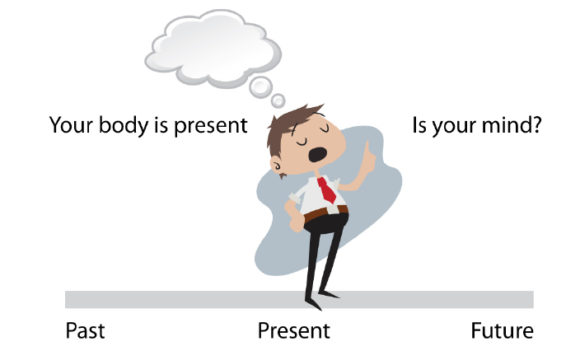
Presence requires attention. If you are always rushing towards the next thing, it becomes difficult to fully experience what is happening now. Imagine drinking your morning coffee while mentally planning the next five hours. You are physically there. But your attention is somewhere else. Or imagine spending an evening with your family while thinking about tomorrow’s responsibilities.
Again, your body is present, but your mind is elsewhere. Slowing down creates an opportunity to bring the two back together. Body and mind. Here and now. This is one reason simple activities can become surprisingly meaningful when performed with full attention.
Walking.
Cooking.
Gardening.
Bathing.
Eating.
Talking.
Listening.
None of these activities need to be extraordinary. Presence can transform the ordinary.
Start With the Smallest Moments
You do not have to redesign your entire life to begin slowing down. Start with moments that already exist. When you wake up, do not immediately reach for your phone. Take a few breaths.
Notice how your body feels. Look outside. Drink your first cup of tea or coffee slowly. When you walk from one room to another, actually notice that you are walking.
When someone speaks to you, listen without simultaneously checking your phone. When you eat, occasionally put down your fork and simply experience the food. These moments may seem insignificant. But a life is made up of insignificant moments.
When we learn to inhabit them more fully, life can begin to feel richer without necessarily changing dramatically.
Create Space Between Activities
One of the simplest ways to slow down is to stop scheduling every minute. If possible, leave small gaps between commitments. Instead of moving immediately from one meeting to another, give yourself five minutes.
Instead of finishing work and immediately beginning household responsibilities, create a short transition.
Take a breath.
Step outside.
Make a cup of tea.
Stretch.
Let your mind register that one activity has ended before beginning another. These small transitions can help prevent the feeling that the entire day is one continuous demand.
Learn to Do One Thing at a Time
Multitasking often feels productive. But constantly switching between tasks can leave the mind feeling scattered. Try giving one activity your full attention.
If you are writing, write. If you are talking to someone, talk. If you are eating, eat. If you are resting, rest. This does not mean you can never combine activities.
It simply means noticing how often you divide your attention without realising it. Single-tasking can feel surprisingly peaceful in a world that constantly asks us to do more than one thing at once.
Put Boundaries Around Your Technology
Technology is not the enemy. The problem is unconscious use. Your phone can be an extraordinary tool, but it can also become a source of constant interruption. Consider creating some simple boundaries.
You might keep your phone away from the table during meals. Turn off unnecessary notifications. Create periods when you do not check messages. Keep your phone out of the bedroom if possible. Have an evening period without social media. Take occasional walks without your device. The aim is not to reject technology. It is to make sure technology serves your life rather than constantly interrupting it.
Rediscover the Value of Boredom
Boredom has become something we instinctively avoid. But boredom can create space for the mind to wander. When there is nothing demanding our attention, thoughts can unfold naturally. Ideas appear. Memories surface. Questions arise. Creativity can emerge. Children often become creative when they are bored because they are forced to create their own stimulation.
Adults can benefit from the same principle. You do not have to fill every empty moment. Allow yourself to wait. Look out of the window. Sit in the garden. Watch the clouds. Do nothing for a few minutes. The world will not end.
Spend More Time in Nature
Nature offers a natural invitation to slow down. Trees do not hurry. The ocean does not rush. The seasons change at their own pace. A garden grows according to its own rhythm. When we spend time in nature, we are temporarily removed from the artificial urgency of modern life.
You may notice that your breathing slows. Your attention widens. Your thoughts become less crowded. You begin noticing small things. The sound of birds. The movement of leaves. Clouds changing shape. Light moving across the landscape. Nature reminds us that not everything valuable happens quickly.
Eat More Slowly
Meals can become another task to complete.
We eat while working.
Eat while watching television.
Eat while scrolling.
Eat quickly because there is somewhere else to be.
Try occasionally making a meal an experience.
Sit down.
Put your phone away.
Notice the colours and aromas.
Taste the food.
Chew slowly.
Have a conversation.
Food is not simply fuel.
A meal can be an opportunity for nourishment, connection and presence.
Rediscover Slow Conversations
Some of the most meaningful conversations cannot be rushed. There is a difference between exchanging information and genuinely connecting.
A quick message may communicate the facts. A long conversation can reveal the person. Ask someone how they really are. Listen to the answer. Do not immediately try to solve their problem. Allow pauses. Let the conversation wander. In a culture of rapid communication, slow conversations can become a form of intimacy.
Learn to Say No
One of the most important skills in learning to slow down is learning to say no. Every commitment requires energy. Every invitation. Every meeting. Every favour. Every project.
Every obligation. If you continually say yes to everything, eventually something has to give. Saying no does not make you selfish. It means recognising that your time and energy are limited.
Before automatically agreeing to something, ask:
Do I genuinely have the capacity for this?
Does it align with what matters to me?
Am I saying yes because I want to, or because I am afraid of disappointing someone?
You do not need to justify every boundary.
Sometimes no is enough.
Stop Treating Rest as Something You Have to Earn
Many people operate according to an invisible rule:
I can rest once everything is done.
The problem is that everything is never done.
There will always be laundry.
Emails.
Housework.
Work projects.
Messages.
Errands.
Responsibilities.
If rest is always postponed until the list is complete, rest may never happen. Instead, consider rest part of the structure of your life. You do not have to earn it. You need it.
Make Your Mornings Slower
How you begin the day can influence the way the rest of it feels. If the first thing you do is reach for your phone and immediately absorb hundreds of messages, headlines and opinions, your mind is being pulled outward before you have had an opportunity to connect with yourself.
If circumstances allow, create a small period of quiet in the morning.
Open a window.
Sit outside.
Stretch.
Pray.
Meditate.
Journal.
Make tea.
Take a few deep breaths.
You do not need an elaborate morning routine.
Even ten minutes of intentional quiet can change the tone of the day.
Create a Slower Evening
The same principle applies at night. Instead of moving directly from work, chores and screens into bed, create a transition. Dim the lights. Put devices away. Take a bath. Read. Listen to calming music. Write down what you are grateful for. Reflect on the day. Spend time with someone you love. The purpose is not to create another perfect routine. It is simply to signal to your mind and body that the day is beginning to come to an end.
Slow Down Your Thinking
Slowing down is not only physical. Sometimes the mind races even when the body is still. We replay conversations. Plan tomorrow. Imagine possible problems. Analyse the past. Try to predict the future. Mindfulness can help us notice this tendency. Instead of following every thought, observe it. You might say internally:
I am having the thought that…
rather than assuming every thought is a fact. This creates a little space between you and your mental activity. You do not have to solve everything immediately. Some questions can wait. Some decisions become clearer with time.
Let Life Be Imperfect
Perfectionism is another form of speed. We rush to fix. Improve. Correct. Organise. Optimise. But life will always contain unfinished things. The house may be untidy. The project may not be perfect.
The garden may need attention. You may not have achieved everything you wanted. Learning to tolerate imperfection can create enormous freedom. Sometimes:
Good enough really is good enough.
Slow Down Enough to Notice What You Actually Want
Perhaps the greatest gift of slowing down is clarity. When there is constant noise, it can be difficult to distinguish between your own desires and the expectations around you.
You may believe you want success because everyone around you values it. You may believe you should pursue a particular career because it is considered respectable. You may feel pressure to constantly improve yourself. But what do you actually want?
What brings you meaning?
What relationships matter?
What kind of person do you want to become?
What does enough look like for you?
These questions cannot always be answered in the middle of constant activity. Sometimes we need silence before we can hear our own answers.
Slowing Down and Spiritual Growth
Many spiritual traditions place importance on stillness for a reason.
Prayer requires attention.
Meditation requires presence.
Contemplation requires space.
Self-reflection requires time.
Even spiritual insight often emerges during moments when we are not actively searching for it. When we slow down, we become more aware of the subtle dimensions of our experience. We notice our thoughts.
Our emotions.
Our relationships.
Our surroundings.
Our values.
Our sense of connection.
This does not mean that every quiet moment will produce a profound spiritual revelation. Often it will simply produce a little more awareness. And awareness is where meaningful change begins.
You Do Not Have to Leave Your Life to Find Peace
There is a temptation to believe that peace can only be found somewhere else.
A retreat.
A holiday.
A remote cottage.
A spiritual centre.
These experiences can be valuable.
But if peace depends entirely on escaping your normal life, it can be difficult to sustain. The deeper practice is learning to create moments of presence within ordinary life.
While washing dishes.
Driving.
Working.
Parenting.
Walking.
Shopping.
Eating.
Talking.
This is where spirituality becomes practical. You do not have to wait for perfect conditions. You can practise presence in the middle of an imperfect life.
A Seven-Day Experiment in Slowing Down
If you want to begin, try a simple experiment.
Day One: Put your phone away for thirty minutes.
Notice how often you instinctively reach for it.
Day Two: Eat one meal without a screen.
Pay attention to the food and your surroundings.
Day Three: Take a slow walk.
Do not listen to anything. Notice what you see and hear.
Day Four: Leave something unfinished.
Practise telling yourself that it can wait.
Day Five: Have one uninterrupted conversation.
Give another person your complete attention.
Day Six: Spend ten minutes in silence.
Do nothing. Simply sit and notice.
Day Seven: Ask yourself what you noticed.
Did you feel calmer?
More restless?
More aware?
Did difficult emotions appear?
Did you enjoy the experience?
There is no right answer. The purpose is simply to become more conscious of your relationship with speed and stillness.
When Slowing Down Feels Impossible
Sometimes the problem is not that we do too much by choice. We may genuinely be overwhelmed by circumstances. Financial pressure. Caregiving. Parenting. Work demands. Health problems. Relationship difficulties. In these situations, advice to “just slow down” can feel unrealistic or even insensitive.
If this is your reality, begin with whatever is possible.
One quiet breath.
One boundary.
One small pause.
One request for help.
One task removed from the list.
One conversation about what you need.
Slowing down does not have to happen all at once.
Small moments matter.
Slowing Down Is a Form of Trust
At a deeper level, slowing down asks us to trust. To trust that we do not have to control every outcome. To trust that not everything needs to happen today. To trust that our worth does not depend upon constant productivity. To trust that life can unfold without our constant intervention. This can be difficult.
We may have spent years believing that our safety and success depend upon staying one step ahead. Learning to slow down gently challenges that belief. It says:
I can pause.
I can breathe.
I can allow this moment to be enough.
Conclusion
Learning to slow down is not about becoming less ambitious, less responsible or less engaged with life. It is about becoming more conscious of the way we spend our most limited resource: our attention. A fast life can be full of achievements and still leave us feeling strangely absent from our own existence.
We can complete hundreds of tasks and barely remember the day. We can communicate constantly while feeling disconnected. We can fill every quiet moment and still feel that something is missing. Slowing down offers another possibility. It allows us to notice.
To listen.
To feel.
To connect.
To reflect.
To experience.
It gives us space to discover what genuinely matters rather than simply responding to everything demanding our attention. You do not need to change your entire life tomorrow.
Start with one moment.
Eat slowly.
Take a walk.
Put your phone down.
Listen to someone.
Sit in silence.
Look at the sky.
Take a breath before answering.
Leave something unfinished.
Let yourself be where you are.
The goal is not to make life perfectly slow.
Life will always have busy seasons.
The goal is to develop the ability to return to yourself within the busyness. Because perhaps a slower life is not really about having fewer things to do. Perhaps it is about being fully present for the things you choose to do. And perhaps the greatest gift of slowing down is discovering that the life you have been rushing through is the very life you were looking for.

Author: Spirit Connection
Welcome to Spirit Connection, your online sanctuary for spiritual growth, enlightenment, and transformation. Founded by me, Glynis Brits - a gifted clairvoyant medium, spiritual teacher, and life coach, my mission is to guide you on a journey of self-discovery, healing, and deeper connection with the spiritual realm. Here at Spirit Connection, I publish daily articles on all things spiritual, esoteric, and metaphysical, offering insights and wisdom to support your awakening. Whether you're looking to connect with your spirit guides, enhance your intuition, or explore the mysteries of the universe, I provide the tools and knowledge to help you navigate your path. Through private readings, spiritual coaching, and personalized guidance, I empower individuals to embrace their divine potential and align with their soul’s purpose. Whether you're seeking clarity, healing, or a deeper understanding of your spiritual journey, I am here to support you every step of the way. Join my community and awaken to the magic of the unseen world. Your journey to enlightenment starts here.