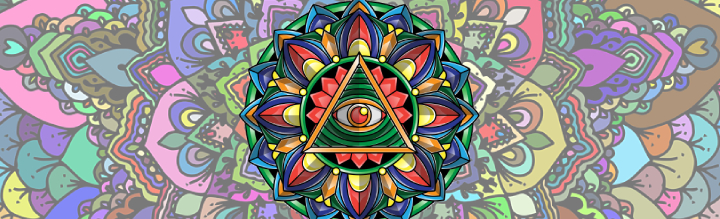
Sacred geometry is often described as the hidden blueprint underlying all of creation. It refers to the recurring patterns, shapes and proportions that appear throughout nature, the human body and the cosmos. From the spiral of a seashell to the structure of galaxies, these forms reveal an underlying order that connects all life. For ancient civilisations, geometry was far more than a mathematical discipline. It was a sacred language through which the divine expressed itself in physical form.
By exploring sacred geometry, we begin to see the universe not as random or chaotic, but as an intelligent and interconnected whole. These patterns invite us to contemplate the deeper structure of reality and our place within it.
Geometry as a Universal Language
Geometry is one of the few languages that transcends culture and time. A circle, triangle or spiral carries meaning regardless of where it is found. Sacred geometry suggests that these shapes are not merely human inventions, but reflections of fundamental principles of existence.
In spiritual traditions, geometry was seen as a bridge between the material and the spiritual. Shapes and proportions were believed to hold specific vibrational qualities that could influence consciousness. By working with these forms through art, architecture and meditation, ancient peoples sought to align themselves with cosmic order and divine intelligence.
This understanding invites a shift in perception. Instead of viewing geometry as abstract or purely intellectual, it becomes a living expression of harmony and balance.
Patterns in Nature
Nature offers countless examples of sacred geometry in action. One of the most well known patterns is the spiral, which appears in galaxies, hurricanes, pinecones and seashells. This spiral often follows the Fibonacci sequence, a numerical pattern in which each number is the sum of the two preceding ones. This sequence creates proportions that are widely regarded as aesthetically pleasing and energetically harmonious.
The hexagon is another powerful geometric form found in nature. Honeycombs, snowflakes and certain crystal structures all display hexagonal symmetry. This shape allows for efficient use of space and structural stability, reflecting nature’s tendency towards balance and optimisation.
Flower petals, leaves and seed heads frequently follow precise geometric arrangements. The sunflower, for example, displays spirals that radiate outward in perfect mathematical order. These patterns are not imposed by an external designer but emerge naturally as life organises itself according to universal principles.
Sacred Geometry Within the Human Body and DNA
The human body itself reflects sacred geometric patterns. Our proportions, the structure of our bones and the rhythms of our biological systems follow mathematical relationships that mirror those found in nature.
DNA, the blueprint of life, is a striking example. Its double helix structure resembles a spiral ladder, echoing the same spiral patterns seen throughout the cosmos. This suggests a profound link between microcosm and macrocosm, between the smallest building blocks of life and the vastness of the universe.
Some researchers and spiritual thinkers propose that geometric patterns influence how energy moves through the body. Ancient healing systems often used symbols and shapes to support balance and wellbeing, indicating an intuitive understanding of geometry’s impact on life force.
Geometry in the Cosmos
When we look to the cosmos, sacred geometry becomes even more apparent. Planetary orbits, star formations and galaxies follow elegant geometric arrangements. The movement of celestial bodies creates patterns that have been studied and revered for millennia.
Ancient astronomers observed these patterns and saw them as expressions of divine order. The alignment of stars and planets was believed to influence life on Earth, reinforcing the idea that humanity is woven into a larger cosmic design.
Modern science continues to uncover the geometric nature of the universe, from the structure of atoms to the fabric of space time. While scientific explanations differ from spiritual interpretations, both point to an underlying order that governs existence.
Sacred Geometry in Ancient Civilisations
Many ancient civilisations incorporated sacred geometry into their spiritual and cultural practices. In Egypt, geometry was central to the construction of temples and pyramids. The proportions of these structures were designed to reflect cosmic harmony and to support spiritual initiation.
In ancient Greece, philosophers such as Plato believed that geometry revealed the fundamental truths of reality. The Platonic solids, five three-dimensional shapes with equal faces and angles, were associated with the classical elements and the structure of the universe.
Sacred geometry also played a vital role in Hindu and Buddhist traditions. Mandalas, intricate geometric designs used in meditation, represent the universe in symbolic form. Creating or contemplating a mandala is a way of aligning the mind with order, unity and spiritual insight.
Gothic cathedrals in Europe were built using precise geometric ratios. These structures were designed not only for beauty, but to elevate consciousness and inspire awe. Light, space and proportion worked together to create an atmosphere of reverence and transcendence.
Geometry as a Spiritual and Metaphysical Tool
Sacred geometry was not only observed but actively used as a spiritual tool. Symbols such as the Flower of Life, the Seed of Life and the Vesica Piscis were believed to contain powerful energetic information. Meditating on these forms was said to activate higher states of awareness and deepen understanding of universal laws.
These geometric symbols are still used today in meditation, art and healing practices. They serve as visual reminders of unity, balance and interconnectedness. Engaging with them can help quiet the analytical mind and open awareness to deeper levels of perception.
A Modern Reawakening
In recent years, interest in sacred geometry has grown as people seek meaning beyond material explanations of reality. This reawakening reflects a desire to reconnect science and spirituality, logic and intuition.
By studying sacred geometry, we are invited to see ourselves as part of a living, intelligent universe. The same patterns that shape galaxies and flowers also shape our thoughts, emotions and creative impulses.
Conclusion
Sacred geometry reveals a universe woven together by harmony, proportion and intelligent design. As the blueprint of creation and the language of the divine, it offers insight into the deep order underlying all life. By recognising these patterns in nature, within our bodies and across the cosmos, we gain a greater appreciation for the unity of existence. Engaging with sacred geometry as a spiritual and metaphysical tool can inspire awe, deepen self-awareness and remind us that we are intimately connected to the greater whole.

Author: Spirit Connection
Welcome to Spirit Connection, your online sanctuary for spiritual growth, enlightenment, and transformation. Founded by me, Glynis Brits - a gifted clairvoyant medium, spiritual teacher, and life coach, my mission is to guide you on a journey of self-discovery, healing, and deeper connection with the spiritual realm. Here at Spirit Connection, I publish daily articles on all things spiritual, esoteric, and metaphysical, offering insights and wisdom to support your awakening. Whether you're looking to connect with your spirit guides, enhance your intuition, or explore the mysteries of the universe, I provide the tools and knowledge to help you navigate your path. Through private readings, spiritual coaching, and personalized guidance, I empower individuals to embrace their divine potential and align with their soul’s purpose. Whether you're seeking clarity, healing, or a deeper understanding of your spiritual journey, I am here to support you every step of the way. Join my community and awaken to the magic of the unseen world. Your journey to enlightenment starts here.