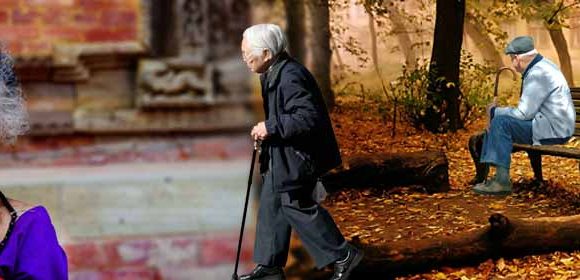
There are moments in life when we know something has changed, yet a part of us continues holding on.
Perhaps it is a relationship that has ended.
A version of yourself you have outgrown.
A mistake you continue to replay.
A resentment you cannot seem to release.
A dream that didn’t unfold the way you imagined.
Or simply the belief that life should have turned out differently.
We often hear the advice:
“Just let it go.”
But letting go isn’t always simple.
If something mattered deeply to us, we can’t necessarily decide one morning that we no longer care and expect the feelings to disappear.
Letting go is usually a process.
It is about acknowledging what happened, understanding what we are holding onto, and gradually making peace with what we cannot change.
What Does Letting Go Really Mean?
Letting go doesn’t mean forgetting.
It doesn’t mean pretending something didn’t hurt.
It doesn’t mean saying that what happened was acceptable.
And it doesn’t necessarily mean allowing someone back into your life.
Sometimes letting go simply means:
“This happened, but I no longer want it to control my present.”
You can remember something without constantly reliving it.
You can acknowledge disappointment without allowing it to define your future.
You can forgive someone without continuing a relationship that isn’t healthy for you.
You can love someone and still accept that your paths have separated.
Letting go is less about erasing the past and more about changing your relationship with it.
Why Do We Hold On?
Holding on can feel safer than releasing.
Even pain can become familiar.
We may hold onto anger because it gives us a sense that someone is still being held accountable.
We may hold onto an old relationship because letting go makes the loss feel final.
We may hold onto guilt because we believe suffering is somehow a way of making up for what we’ve done.
We may hold onto control because uncertainty feels frightening.
Sometimes we hold onto an identity because we don’t yet know who we would be without it.
The first step isn’t forcing yourself to let go.
It is asking:
“What am I getting from holding onto this?”
The answer may reveal something important.
Letting Go of the Need for Control
One of the hardest things to release is the belief that we can control everything.
We can influence many aspects of our lives.
We can make choices.
We can prepare.
We can communicate.
We can set boundaries.
We can change our behaviour.
But we cannot control every outcome.
We cannot control what another person thinks.
We cannot control whether someone chooses to stay.
We cannot control every event that happens to us.
We cannot control the past.
Trying to control what is fundamentally outside our control can create enormous emotional strain.
Sometimes peace begins with recognising the difference between:
What is mine to influence
and
What is not mine to control.
That distinction can be liberating.
Letting Go of Old Versions of Yourself
We don’t only need to let go of things.
Sometimes we need to let go of who we thought we had to be.
Perhaps you once believed you needed to be the strong one.
The successful one.
The person everyone could rely on.
The person who never needed help.
The person who kept everyone happy.
The person who never made mistakes.
These identities may have helped you navigate earlier stages of life.
But something that once protected you may eventually become something that limits you.
Ask yourself:
“Who am I trying to be, and why?”
Perhaps you are ready to become someone who rests.
Someone who says no.
Someone who asks for help.
Someone who admits uncertainty.
Someone who allows other people to be disappointed.
Growth sometimes requires releasing an identity that no longer fits.
Letting Go of Resentment
Resentment can be particularly difficult because it often feels justified.
Someone hurt you.
Someone disappointed you.
Someone treated you unfairly.
Your anger may have a valid reason.
Letting go doesn’t require pretending otherwise.
In fact, healthy letting go often begins with acknowledging the truth:
“That hurt me.”
“I didn’t deserve that.”
“I wish things had been different.”
Once the experience has been acknowledged, you can begin asking:
“Do I want to keep carrying this?”
Resentment can keep us emotionally connected to something we desperately want to move beyond.
Letting go doesn’t change what happened.
It changes how much space the experience occupies in your present.
Forgiveness Isn’t Always What You Think
Forgiveness is sometimes presented as something we owe other people.
But forgiveness can be deeply personal.
You don’t have to excuse harmful behaviour.
You don’t have to forget.
You don’t have to reconcile.
And you don’t have to forgive before you’re ready.
Sometimes forgiveness means releasing the hope that the past could have been different.
Sometimes it means releasing the desire to keep punishing yourself.
Sometimes it means accepting that you may never receive the apology you wanted.
And sometimes the healthiest thing you can do is simply say:
“I am choosing not to carry this forward.”
That can be enough.
Letting Go of Limiting Beliefs
As we’ve explored in previous articles, we can also hold onto beliefs about ourselves.
“I’m not good enough.”
“People always leave.”
“I can’t trust anyone.”
“I’m too old to start again.”
“This is just who I am.”
These beliefs can become so familiar that we mistake familiarity for truth.
Letting go begins by becoming aware of the belief.
Then questioning it.
Where did this belief come from?
Is it always true?
How has it shaped my choices?
Who might I become without it?
You don’t need to replace an old belief with an unrealistic positive statement.
Sometimes the first step is simply becoming open to another possibility.
Letting Go Doesn’t Mean Giving Up
There is an important difference between surrender and giving up.
Giving up can mean abandoning something because you believe there is no possibility of change.
Surrender, in a spiritual sense, can mean accepting reality as it is rather than fighting against what you cannot control.
You might still take action.
You might still pursue your goals.
You might still work towards change.
But you stop demanding that reality unfold according to one specific script.
You do what you can.
Then you allow life to unfold beyond your control.
A Simple Letting-Go Practice
Find a quiet place and think of something you are struggling to release.
Write down:
What happened?
Describe it honestly.
Then write:
What am I still holding onto?
Perhaps it is anger.
Fear.
Guilt.
Hope.
A particular outcome.
A need for an apology.
An old identity.
Then ask:
What is within my control now?
And finally:
What would it feel like to stop carrying this in the same way?
You don’t need to force an answer.
Sometimes simply identifying what you’re holding is the beginning of release.
The Role of Acceptance
Acceptance is often misunderstood.
Acceptance doesn’t mean liking something.
It doesn’t mean agreeing with it.
It doesn’t mean saying:
“It was meant to happen.”
It simply means acknowledging:
“This is what has happened.”
There is enormous emotional energy involved in arguing with reality.
It shouldn’t have happened.
They shouldn’t have done that.
I shouldn’t have made that mistake.
Life should have turned out differently.
Sometimes these thoughts are understandable.
But eventually, healing may require us to move from:
“This shouldn’t have happened.”
to:
“It happened. What do I choose to do with my life now?”
That is where possibility begins.
Letting Go in Meditation
Meditation can provide a gentle way of practising release.
Sit quietly and notice your thoughts.
When a thought appears, you don’t need to follow it.
You don’t need to push it away either.
Simply notice it and allow it to pass.
A memory arises.
You notice.
A worry appears.
You notice.
A plan comes into your mind.
You notice.
Then you return to the present.
This simple practice can teach an important lesson:
Not everything that appears in your mind needs to be held onto.
The same principle can gradually be applied to emotions, beliefs and stories.
What Are You Ready to Release?
Take a moment to consider your own life.
What are you carrying that belongs to the past?
Perhaps it is someone else’s opinion.
Perhaps it is a mistake.
Perhaps it is resentment.
Perhaps it is an expectation.
Perhaps it is an identity.
Perhaps it is the belief that you need to have everything figured out.
Perhaps it is simply the need for life to look different from how it currently looks.
You don’t have to release everything at once.
Start with one thing.
Acknowledge it.
Thank yourself for how you survived it.
Learn what you can.
And then ask whether you are ready to put some of the weight down.
Making Space for What Comes Next
Letting go can feel like loss because something familiar is leaving.
But release can also create space.
Space for new experiences.
New beliefs.
New relationships.
New possibilities.
A different version of yourself.
This doesn’t mean that every ending immediately leads to something better.
Sometimes there is simply a period of uncertainty.
And that’s okay.
You don’t need to know what comes next before you release what no longer belongs with you.
Perhaps this is one of the deepest lessons of letting go:
You don’t have to know what will fill the space before you are allowed to create it.
Life is constantly changing.
People change.
Relationships change.
Our bodies change.
Our beliefs change.
Our priorities change.
Who we were five years ago may not be who we are today.
And perhaps spiritual growth isn’t about holding tightly to any particular version of ourselves.
Perhaps it is learning when to hold on, when to change, and when to gently open our hands.
Because sometimes the thing standing between us and the next chapter isn’t that we don’t know where to go.
It’s that we’re still holding onto where we’ve been.
And perhaps letting go begins with one simple question:
“What am I ready to stop carrying?”

Author: Spirit Connection
Welcome to Spirit Connection, your online sanctuary for spiritual growth, enlightenment, and transformation. Founded by me, Glynis Brits - a gifted clairvoyant medium, spiritual teacher, and life coach, my mission is to guide you on a journey of self-discovery, healing, and deeper connection with the spiritual realm. Here at Spirit Connection, I publish daily articles on all things spiritual, esoteric, and metaphysical, offering insights and wisdom to support your awakening. Whether you're looking to connect with your spirit guides, enhance your intuition, or explore the mysteries of the universe, I provide the tools and knowledge to help you navigate your path. Through private readings, spiritual coaching, and personalized guidance, I empower individuals to embrace their divine potential and align with their soul’s purpose. Whether you're seeking clarity, healing, or a deeper understanding of your spiritual journey, I am here to support you every step of the way. Join my community and awaken to the magic of the unseen world. Your journey to enlightenment starts here.