The concept of spirit animals has become widely discussed in modern spirituality, often appearing in books, online content and personal reflection practices. For some, it is a deeply meaningful way of understanding inner guidance and personality traits. For others, it is a symbolic framework that helps make sense of life experiences and emotional patterns.
Within a spiritual context, spirit animals are often understood as symbolic or energetic representations of qualities, instincts and lessons that are active within a person’s life. They are not necessarily literal animals that “belong” to someone, but rather meaningful archetypes that reflect aspects of the human journey.
However, the topic requires a balanced approach. While spirit animals can be a valuable tool for reflection and self-awareness, they should be approached with respect, cultural sensitivity and discernment.
At their core, spirit animals invite us to explore the relationship between human consciousness and nature, and to consider how instinct, symbolism and intuition shape our inner world.
Understanding the Idea of Spirit Animals
The idea of spirit animals originates from various indigenous and ancestral traditions, where animals were seen as carriers of wisdom, guidance and spiritual significance. In these contexts, animals were not viewed merely as physical creatures but as part of a sacred natural order.
In modern spiritual practice, the term “spirit animal” is often used more loosely to describe an animal that a person feels strongly connected to on a symbolic or emotional level.
A spirit animal may represent:
- Personality traits
- Emotional strengths or challenges
- Life lessons or themes
- Instinctive patterns of behaviour
- Inner guidance or intuition
For example, someone who identifies with a wolf may associate with independence, loyalty or intuition. Someone drawn to an owl may connect with wisdom, observation or insight.
It is important to understand that these associations are symbolic rather than literal. They are tools for reflection, not fixed identities or external spiritual authorities.
Symbolism and the Human Mind
The human mind naturally thinks in symbols. Throughout history, humans have used imagery from nature to represent complex emotional and psychological experiences.
Animals are particularly powerful symbols because they embody instinctual qualities that humans recognise intuitively. Unlike abstract ideas, animals express behaviour in clear, observable ways.
This makes them useful mirrors for self-reflection.
For example:
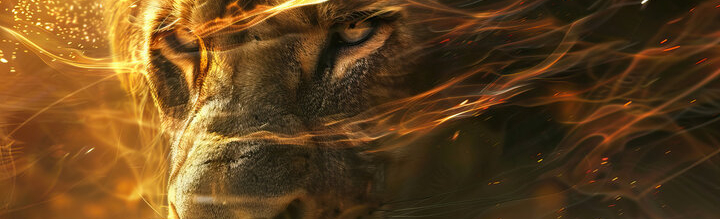
- The lion may symbolise courage or leadership
- The deer may symbolise gentleness and sensitivity
- The fox may symbolise adaptability and intelligence
- The bear may symbolise strength and introspection
When people connect with these symbols, they are often recognising aspects of themselves or qualities they are developing.
From a psychological perspective, spirit animals can be seen as projections of inner traits onto external symbols. From a spiritual perspective, they may also be understood as meaningful reflections within a larger interconnected field of consciousness.
Both interpretations can coexist without contradiction.
Spirit Animals and Intuition
Many people report that their connection with a spirit animal arises through intuition rather than logical reasoning.
They may feel drawn to a particular animal repeatedly in dreams, meditation or daily life. This repeated attraction often leads to reflection on what the animal represents and why it feels significant.
Intuition plays an important role in this process. It is often described as a subtle inner awareness that guides attention towards certain themes or symbols.
However, intuition should be balanced with grounded thinking. Not every repeated image or thought necessarily carries deep spiritual meaning. Sometimes the mind simply notices patterns that stand out due to personal interest or emotional relevance.
The key is not to over-interpret, but to reflect thoughtfully on what feels meaningful in a balanced way.
Cultural Respect and Awareness
It is essential to acknowledge that the concept of spirit animals has deep cultural roots in various indigenous traditions. In many of these traditions, animal spirits are part of sacred spiritual systems that involve specific practices, teachings and cultural contexts.
Because of this, modern usage of the term should be approached with respect and awareness.
Some spiritual practitioners prefer alternative terms such as:
- Animal guides
- Totem animals
- Animal archetypes
- Nature symbols
These terms can help maintain respect for the original cultural contexts while still allowing individuals to explore symbolic meaning in their own spiritual journey.
Respect in spirituality is important. It ensures that practices are approached with integrity rather than appropriation or superficial use.
Animals as Teachers in Nature
One of the most powerful aspects of connecting with animal symbolism is the recognition that animals themselves offer observable lessons through their behaviour.
Nature is a constant teacher.
Animals demonstrate qualities such as:
- Survival instinct
- Adaptability
- Cooperation
- Patience
- Awareness of environment
- Balance between action and rest
When people observe animals in nature or reflect on their characteristics, they often gain insight into human emotional and psychological patterns.
For example, observing a bird in flight may inspire a sense of freedom or perspective. Watching a predator may reflect focus and determination. Observing herd animals may highlight the importance of community and belonging.
These reflections can be deeply grounding and insightful when approached with mindfulness.
Spirit Animals as Inner Reflection
From a spiritual development perspective, spirit animals are often most useful as tools for self-reflection rather than external guidance systems.
When someone identifies with a particular animal, it can open questions such as:
- What qualities do I see in this animal that I relate to?
- What strengths or challenges does this symbol reflect in my life?
- What am I currently learning about myself through this association?
In this way, spirit animals become mirrors for inner exploration.
They can help individuals recognise strengths they may not fully acknowledge or challenges they may need to address.
This reflective process can support emotional growth and self-awareness.
The Role of Dreams and Imagination
Dreams and imagination often play a role in experiences of spirit animals or animal symbolism.
During dreams, the mind processes emotional experiences and unconscious thoughts. Animals appearing in dreams may symbolise emotions, instincts or situations that are being worked through internally.
Similarly, during meditation or quiet reflection, the imagination may present symbolic imagery that feels meaningful.
From a spiritual perspective, these experiences may be interpreted as intuitive communication or symbolic guidance. From a psychological perspective, they may be understood as expressions of the subconscious mind.
Both perspectives can offer valuable insight.
What matters most is the meaning the individual derives from the experience and how it supports personal growth.
Avoiding Over-Identification
While spirit animal symbolism can be meaningful, it is important to avoid rigid identification or attachment.
Claiming a fixed identity based on an animal can limit self-understanding rather than expand it. Human beings are complex and constantly evolving. No single symbol can fully define a person.
Spirit animals should be seen as fluid reflections rather than permanent labels.
A person may resonate with different animal symbols at different stages of life as they move through new experiences and emotional growth.
Flexibility allows for deeper understanding and prevents spiritual concepts from becoming restrictive.
Balance Between Symbolism and Reality
A healthy spiritual approach maintains balance between symbolic meaning and practical reality.
Spirit animals should not replace personal responsibility, emotional awareness or grounded decision-making. They are supportive tools for reflection, not substitutes for real-world action.
For example, identifying with a wolf may inspire independence, but it does not replace the need for healthy relationships and emotional awareness. Connecting with the symbolism of a bird may inspire freedom, but it does not remove real-life responsibilities.
Spiritual symbolism is most powerful when integrated into everyday life in a balanced and practical way.
A Modern Spiritual Perspective
In modern spirituality, the concept of spirit animals continues to evolve. For many people, it serves as a bridge between nature, intuition and self-awareness.
It reflects a growing desire to reconnect with nature and to find meaning in symbolic and intuitive experiences.
Whether interpreted spiritually or psychologically, the idea encourages people to look inward and explore the deeper layers of their personality, emotions and instincts.
It also reminds us that humans are part of the natural world, not separate from it. The qualities we see in animals often reflect qualities that exist within ourselves.
Reflecting on Personal Connection
When engaging with spirit animal symbolism, it can be helpful to approach it with curiosity rather than certainty.
Instead of asking “What is my spirit animal?” it may be more useful to ask:
- What animal symbols currently resonate with me?
- What qualities am I being invited to develop or understand?
- How does this symbol reflect my current life experiences?
This reflective approach keeps the practice grounded, flexible and personally meaningful.
A Symbolic Language of Nature
Ultimately, spirit animals can be understood as part of a symbolic language through which humans interpret their connection to nature and inner experience.
They offer a way to reflect on instinct, emotion and personal growth through imagery that is familiar and meaningful.
Whether viewed through a spiritual, psychological or symbolic lens, they invite awareness, reflection and connection with the natural world.
When approached with respect and balance, spirit animal symbolism can become a gentle tool for self-discovery, helping individuals better understand themselves and their place within the wider rhythm of life.
In this sense, spirit animals are not about defining who we are in a fixed way, but about exploring who we are becoming through the ever-unfolding journey of awareness and growth.

Author: Spirit Connection
Welcome to Spirit Connection, your online sanctuary for spiritual growth, enlightenment, and transformation. Founded by me, Glynis Brits - a gifted clairvoyant medium, spiritual teacher, and life coach, my mission is to guide you on a journey of self-discovery, healing, and deeper connection with the spiritual realm. Here at Spirit Connection, I publish daily articles on all things spiritual, esoteric, and metaphysical, offering insights and wisdom to support your awakening. Whether you're looking to connect with your spirit guides, enhance your intuition, or explore the mysteries of the universe, I provide the tools and knowledge to help you navigate your path. Through private readings, spiritual coaching, and personalized guidance, I empower individuals to embrace their divine potential and align with their soul’s purpose. Whether you're seeking clarity, healing, or a deeper understanding of your spiritual journey, I am here to support you every step of the way. Join my community and awaken to the magic of the unseen world. Your journey to enlightenment starts here.